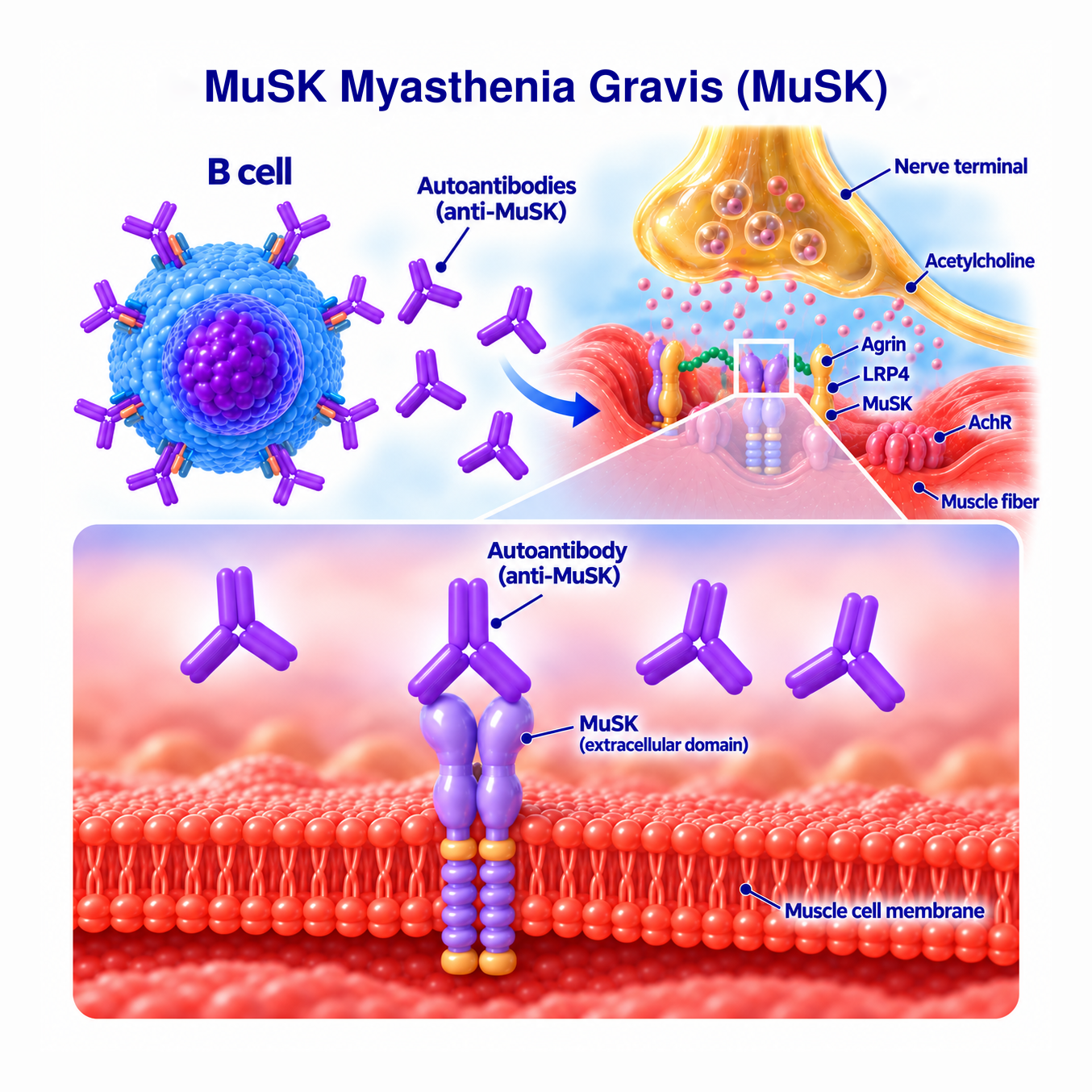
MuSK-positive myasthenia gravis (MuSK MG) is a chronic autoimmune neuromuscular disease driven by pathogenic antibodies against muscle-specific kinase (MuSK), a protein essential for maintaining communication between nerves and muscles. These antibodies disrupt the signaling required to organize acetylcholine receptors at the neuromuscular junction, impairing muscle activation and causing fluctuating weakness and fatigue. MuSK MG often prominently affects the facial, swallowing, speech, neck, and respiratory muscles, potentially leading to severe swallowing difficulties and life-threatening respiratory complications. Unlike the more common AChR-positive form of MG, MuSK MG is predominantly associated with IgG4 autoantibodies that interfere with protein signaling rather than primarily causing complement-mediated damage. Current treatments rely on immunosuppression, broad B-cell depletion, or therapies that remove or lower circulating antibodies. While these approaches can provide substantial benefit, some patients experience relapses or require ongoing treatment, highlighting the need for precise therapies that selectively address the disease-driving autoimmune response and provide durable disease control. MuSK AgDC is a targeted therapy with a dual mechanism of action: Selectively eliminating the autoreactive B cells that produce pathogenic anti-MuSK antibodies while also sequestering close to 100% of the circulating disease-causing autoantibodies, with the potential to provide for the first time potentially curative treatment for MuSK MG.